


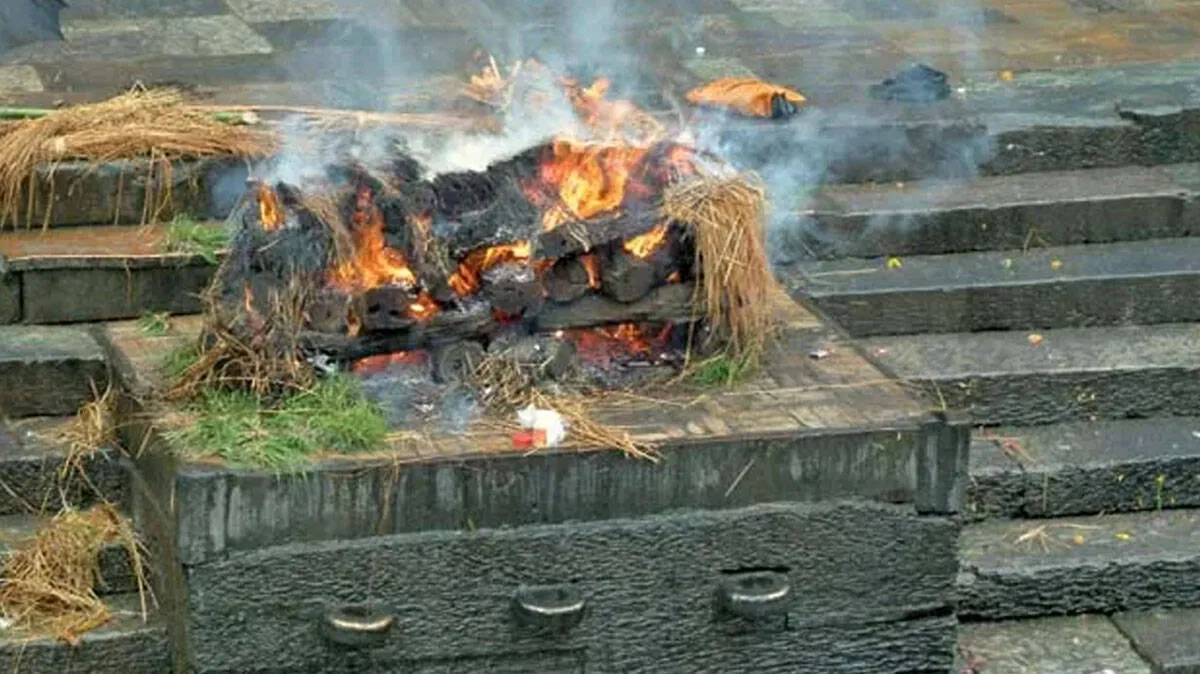
It turns out that going out in a blaze of glory isn't quite as absolute as we think. While it is widely assumed that the cremation process reduces the entire human body into a neat pile of dust, a rather stubborn truth remains hidden behind the furnace doors: some parts of us simply refuse to turn to ash.
According to certain religious beliefs, cremation is the customary practice for handling the deceased. Most people are under the impression that the majority of the human body completely disintegrates into ash during this process. However, there is a lesser-known fact that few dare to think about—certain body parts possess an incredible ability to resist even the most extreme heat.
So, what exactly manages to survive the inferno? According to experts, the parts that do not completely turn to ash include:
Experts state that these particular bones are exceptionally thick and hard, which is precisely why they are not easily destroyed. Even after the body has been burning for hours, experts note that these durable skeletal remnants still remain.
It is certainly not for a lack of heat. A typical cremation takes place at blistering temperatures ranging from approximately 760°C to 1,000°C.
At this extreme thermal level, the softer elements of the human form—including the skin, muscles, fat, and internal organs—are destroyed very quickly. However, because our bones are constructed from calcium phosphate, they are built to last much longer, proving that some parts of us are simply too tough to go up in smoke.














 HOME
HOME LATEST
 NOTIFIED NEWS
 POLL
POLL KERALA
  EDITORIAL
  INDIA
INDIA  WORLD
WORLD  CINEMA
  SPORTS
  LIFESTYLE
  SPECIAL
  SCIENCE & TECHNOLOGY
 |
|